
























Holiday season routines reveal themselves in small places, in the grocery cart, in the way someone orders a salad beside the pastelitos, in the quiet decision to walk after dinner, in a calendar invite that says “workout” and actually gets honored.
Across Latino communities, health and fitness have begun to look less like a temporary fix and more like a lived rhythm, shaped by people who grew up inside households where food equals love, stress equals silence, and bodies become a public topic at family gatherings, yet who now choose movement as a form of self-respect, self-control, and self-protection, especially during a season built around indulgence.
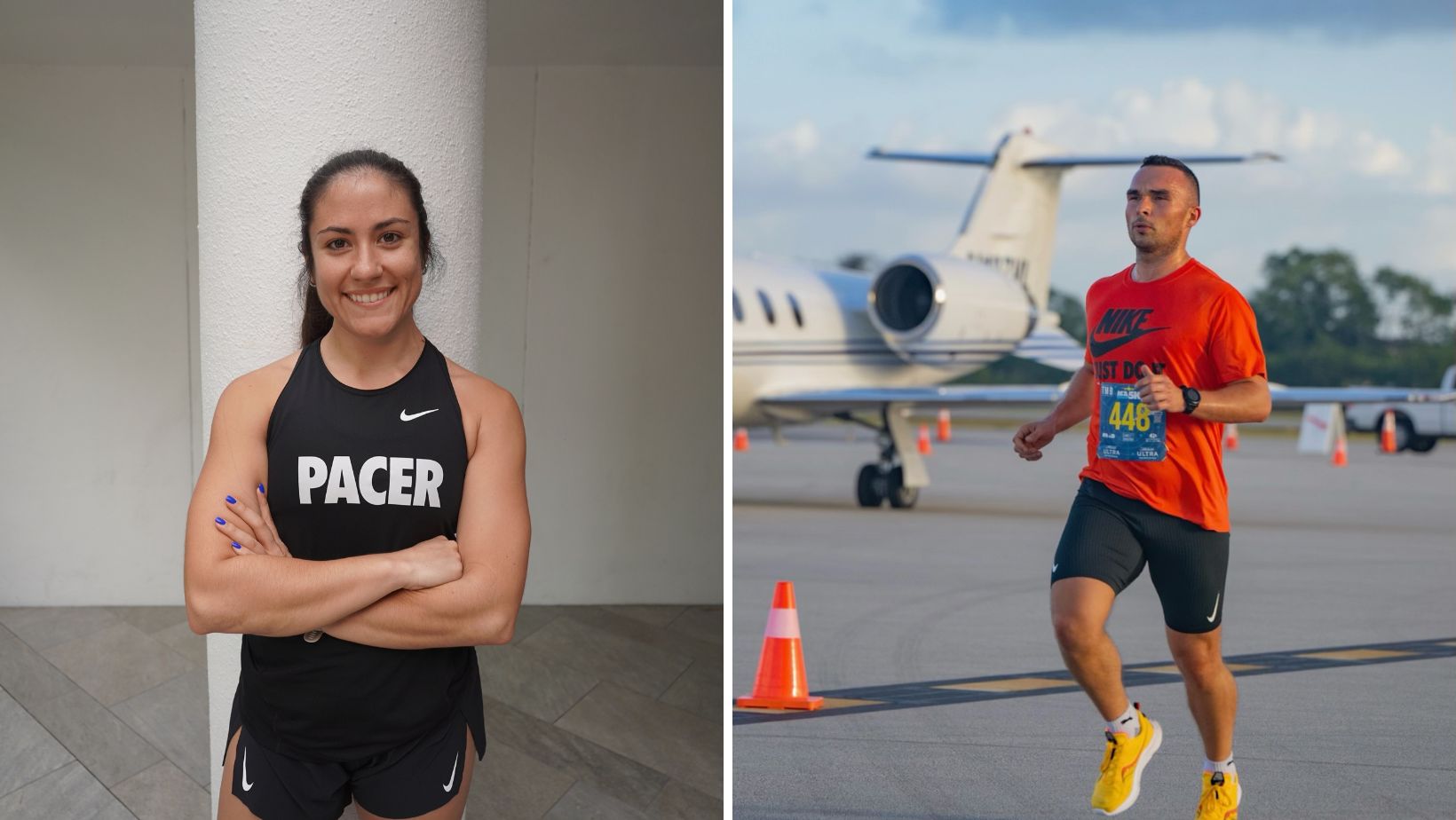
In South Miami, that shift shows up through two voices who speak about discipline, confidence, and community with the kind of specificity that makes a lifestyle change feel real. Javier Fernández de la Torre, a Cuban-Spanish-American personal trainer, runner, and the owner of Steelhouse Fitness, describes how movement helped him survive adolescence and rebuild his sense of self. Valeria Ruiz, of Argentinian descent, marketing director for the Latino-owned brand Mr. Tango, also a trainer and runner, explains how strength and consistency became part of her identity long before running clubs became a social trend.
A Holiday Season That Looks Different in Latino Households
Health conversations in Latino families often begin with care and end with pressure, especially when relatives talk about weight as if it were character, yet this season carries a visible shift as more Latinos and Latinas choose habits that feel steady and sustainable, even while the table stays full and the invitations keep arriving.
That shift does not require perfection. It asks for intention, and it shows up when someone chooses a morning run after a late night, when someone drinks water between coquito pours, when someone lifts weights because strength feels useful, and when someone joins a run club because community makes consistency easier.
The language around this shift carries a familiar phrase, breaking generational cycles, yet the real story sits inside the everyday choices that keep happening even when the season gets loud.
The Way Discipline Becomes Personal
Javier describes his identity in terms that feel immediate and grounded, because his life sits at the intersection of cultures and expectations. “First and foremost, I am Spanish, Cuban, and American. Those are the biggest cultural signifiers.”
His relationship with fitness begins with a confession that many people understand even if they rarely say it aloud. “It did not start that way. I was one of the least active people in the family. I ate a lot of food. My diet and nutrition were absolutely abysmal.”
He speaks about childhood with a blunt humor that still carries sting, because the body remembers. “I was pleasantly plump when I was younger. A round head, round body. Everything was proportional. My nickname was Mini Buddha.”
Under that joke sits something familiar to many Latino kids who loved sports yet felt judged by appearance before skill had a chance to speak, and Javier explains that frustration with the clarity of someone who has had time to process it, because he wanted competition yet felt locked out by the way people read his body.
His turning point carries a painful truth. Exercise began as a coping mechanism when his parents divorced and sadness filled the house. “During it, it sucked. I used exercise as an outlet to numb myself at first. I wanted to get back home and be so tired that I could not think of anything.”
He describes that beginning with honesty that avoids romance. “I could not say my exercise habit started in a healthy way. It was my drug. It still is my drug for me to cope with pain that can come my way.”
Running did not arrive as an instant love story. It arrived through embarrassment, effort, and the stubbornness that shows up when someone gets underestimated. He remembers hating running and being left behind during school fitness tests, and then he remembers what happened when he joined a cross country team that intimidated him, and he heard an adult dismiss him within earshot. “I give this kid two weeks before he quits.”
That dismissal turned into fuel, and he explains why it hit so hard. “There is a small moment where I think you believe it. I need to prove to myself they are wrong.”
He describes the moment his body surprised him, when a six-minute-mile suddenly appeared in a life that had once maxed out at eleven and a half. “I lost my mind. I wanted to stick with the people leading it. I did it again, and I realized it was not a one time thing.”
Years later, he watches running gain popularity and he sees the beauty and the mess of it, because every trend comes with motivations that feel shallow alongside motivations that feel survival based. He explains his own relationship with it in simple terms. “Running is my version of meditation.”
He also describes why the running community works for Latinos who want real change, because the people who show up consistently bring a kind of energy that spills into the rest of life, and he frames it as proximity to discipline and care, not aesthetics. “These are people who want to improve their health or maintain their health. These are people you want to surround yourself with.”
When he talks to beginners, he brings the conversation back to the smallest unit of change, because momentum begins with movement. “You have to take the first step. Just try.”
He describes how he used chalk at a park to measure progress, a childlike method that still feels perfect because it turns discipline into something visible. “I remember setting little benchmarks. I would mark it and see if I could go a little further the next time.”
His final advice lands as a request for humility, the kind of humility that many Latinos learn to suppress while trying to survive. “I would encourage people to remove their ego while trying something new, and accept failure as a normal consequence of trying something unfamiliar.”
The Confidence That Comes From Strength
Valeria’s story begins with immigration and work ethic, the kind that shapes a family without ever calling itself a lesson. “Both of my parents migrated here. They met here in Miami. They both started their own businesses.”
She describes a childhood filled with activity and permission, supported by parents who worked long hours yet still protected space for exploration. “They gave me the opportunity to explore whatever I liked while making sure I stayed disciplined.”
Sports became a normal part of life, in part because community shapes a kid as much as family does. She talks about growing up surrounded by neighbors and classmates who stayed active, including Colombian influence that made sports feel like a shared language. “They all played sports, especially the guys, which pushed me to start playing basketball, volleyball. I played softball, badminton.”
Her mother’s presence matters most in the origin story, because Valeria grew up watching a woman treat movement as routine rather than punishment. “My mom definitely had a big influence. Since I was a kid, she always worked out.”
She describes going to the gym as a child, too young for machines, sitting and watching. “I would sit down and watch until I got to a certain age.”
When she finally gained access, she took it seriously, and the through line becomes clear. Fitness did not arrive as a phase. It arrived as part of her environment, part of her identity, part of her idea of adulthood.
Body image still exists in her story, because it exists in almost every Latino household story, yet she describes the shift that happens when strength becomes a priority and comparison loses its grip. “At the end of the day, my body does amazing things. It does not look perfect. I can compare myself to other people, but the way I look at it is, are those people able to do what I do.”
She talks about falling in love with progress, with the satisfaction of getting stronger, and with the freedom that arrives when the goal becomes internal. “I loved feeling strong. I loved working out with the guys and being able to do what the guys could do. It got to a point where it did not matter to me what they thought. It was how it made me feel.”
Running grew alongside that mindset. She loved it early, then kept it as a steady habit through school, college, and adulthood, and when gyms closed during COVID, the outdoors became the obvious next step. “One of the main things you can do outside is run. So that is what I did.”
She describes the fear many women carry when it comes to running outdoors, and she describes the different kind of intimidation that comes with joining a club alone, especially when you feel shy and out of place at first. “I found this club on Facebook and I was like, let me show up. That was scary. I did not talk to anybody for weeks.”
Her advice is direct because she knows that preparation can become another form of avoidance. “The best thing is to just get out there. Just show up.”
She describes friends arriving in shoes they thought were right, learning in real time, and staying anyway because community rarely demands perfection, it asks for presence. “You do not learn these things until you put yourself in a situation.”
She ends with a line that sounds like a life philosophy disguised as fitness advice, which feels exactly right for a holiday season when people want a reset without shame. “There is a beauty in being a beginner because you can grow so much. Growth is beautiful.”
The Shift Latino Communities Are Choosing Right Now
Javier and Valeria describe different starting points, yet their stories meet in the same place, a belief that discipline becomes easier when it stops being punishment and starts being care, and a belief that community can carry you through the early days when motivation feels thin.
Latinas are claiming strength with a confidence that feels earned. Latinos are making room for change while also taking care of themselves, even when old expectations still linger. The holiday season keeps happening, the food keeps coming, the family commentary keeps arriving, yet a different norm is forming through routines that get repeated.
The strongest detail in both stories sits inside how ordinary their advice sounds, because real change tends to be ordinary in the beginning, and then it becomes identity.
“You have to take the first step. Just try,” Javier says.
“The best thing is to just get out there. Just show up,” Valeria says.
Holiday season does not pause for personal growth, yet the people showing up to run clubs, gyms, and long walks keep proving that health can live inside celebration. Truly, a new chapter can begin without waiting for a perfect date on the calendar. How great is that?
For Image credit or remove please email for immediate removal - info@belatina.com